Contents:
- The Short Answer: What Roses Cost in 2026
- Why Rose Prices Vary So Much
- Where the Roses Come From
- Stem Length and Bud Size
- Freshness and Sourcing Cycle
- Arrangement, Labor, and Presentation
- Quick Cost Breakdown: What to Expect at Each Budget Level
- Dozen Roses: Why $40 and $120 Can Look Nearly Identical
- Seasonal Price Spikes: When to Buy and When to Wait
- A Real Purchase: What $85 Actually Gets You
- Online vs. Local Florist: The Price-Quality Trade-Off
- How Vase Life Changes the Value Equation
- FAQ: Rose Pricing Questions Answered
- How much does a dozen roses cost on average?
- Why are roses so expensive around Valentine’s Day?
- What’s the difference between a bouquet and a dozen roses?
- Are expensive roses actually worth the extra cost?
- Do rose prices include delivery?
How much should you actually spend on roses — and are you overpaying? Whether you’re buying a single stem or a lavish 24-rose arrangement, rose prices in 2026 vary more than most people expect. Here’s the straightforward breakdown.
The Short Answer: What Roses Cost in 2026
A single rose from a florist runs $3–$8. A dozen roses — the classic standard — costs between $40 and $120, depending on the source, stem quality, and whether you add arrangement, wrapping, and delivery. A full bouquet with mixed greenery and premium stems lands between $65 and $175 for most retail buyers. High-end specialty arrangements can push past $200.
Those numbers hold for 2026, though seasonal spikes — most notably around Valentine’s Day and Mother’s Day — can push prices 30–60% higher in a matter of days.
Why Rose Prices Vary So Much
Rose pricing isn’t arbitrary. Several real factors drive the difference between a $40 supermarket bunch and a $110 florist arrangement.
Where the Roses Come From
The majority of cut roses sold in the U.S. are imported from Colombia and Ecuador, where high-altitude farms produce long-stemmed, large-headed varieties at lower growing costs. Premium Dutch roses and domestic California-grown roses cost more due to shorter supply chains and stricter growing conditions. The origin affects both price and quality — Ecuadorian roses, for instance, are known for exceptionally long vase life and deep color saturation.
Stem Length and Bud Size
Commercial rose grades are measured in centimeters of stem length. A 40cm stem is entry-level. A 60cm stem — the kind you see in upscale florist arrangements — costs significantly more per unit. Longer stems require more growing time, more careful handling, and more storage space during transport. When you pay more at a quality florist, you’re often paying for those extra 20 centimeters.
Freshness and Sourcing Cycle
Grocery store roses are frequently cut 7–10 days before you buy them. A specialty florist who sources directly from growers or through premium wholesalers offers roses cut 24–48 hours out. That gap in freshness explains why flowers from a dedicated florist Manalapan NJ outperform supermarket bunches even when the petal count is identical — and why they hold up for a week or more instead of drooping after two days.
Arrangement, Labor, and Presentation
When you buy from a florist, part of what you’re paying for is skilled arrangement. Cleaning and conditioning the stems, selecting complementary greenery, choosing filler blooms, hand-wrapping with kraft paper and ribbon, adding a card — this is labor-intensive work that supermarkets simply don’t provide. That labor typically adds $15–$35 to the final price, and the visual difference is immediately obvious.
Quick Cost Breakdown: What to Expect at Each Budget Level
- Under $30: 3–5 wrapped stems from a grocery store or gas station. Functional, but minimal wow factor. Often shorter-stemmed and less fresh.
- $40–$65: A standard dozen from a discount floral shop or online warehouse retailer. Expect basic wrapping, decent stem length, moderate freshness.
- $65–$100: A florist-arranged dozen with greenery, quality wrapping, and a handwritten card. This is the sweet spot for most gifting occasions.
- $100–$150: Premium long-stemmed roses (18–24 stems), choice of varieties like garden roses or David Austin roses, professional arrangement, same-day delivery.
- $150–$250+: Luxury arrangements — 36+ stems, mixed rose varieties, vase included, specialty packaging. Often used for anniversaries, proposals, and high-end events.
Dozen Roses: Why $40 and $120 Can Look Nearly Identical
Here’s something that trips up first-time buyers: two bouquets of 12 roses can look almost the same on a website but perform completely differently in a vase. The $40 version might use 40cm stems, shipped in bulk, arranged loosely, with no conditioning. The $110 version uses 60cm premium stems, conditioned for 24 hours, hand-arranged with eucalyptus and wax flower, and delivered within hours of arrangement.
The difference shows up not at purchase, but two or three days later — when one bouquet is still fully open and fragrant, and the other is already dropping petals.
Jennifer Ramos, a certified floral designer with 14 years of experience working weddings and corporate events in the New Jersey area, explains it plainly: “The single best investment a buyer can make is choosing a florist who sources fresh and arranges to order. A dozen roses from a quality source, properly conditioned and arranged the morning of delivery, will outlast a two-week-old bunch from a big box store every single time. You’re not paying for more flowers — you’re paying for more days.”
Seasonal Price Spikes: When to Buy and When to Wait
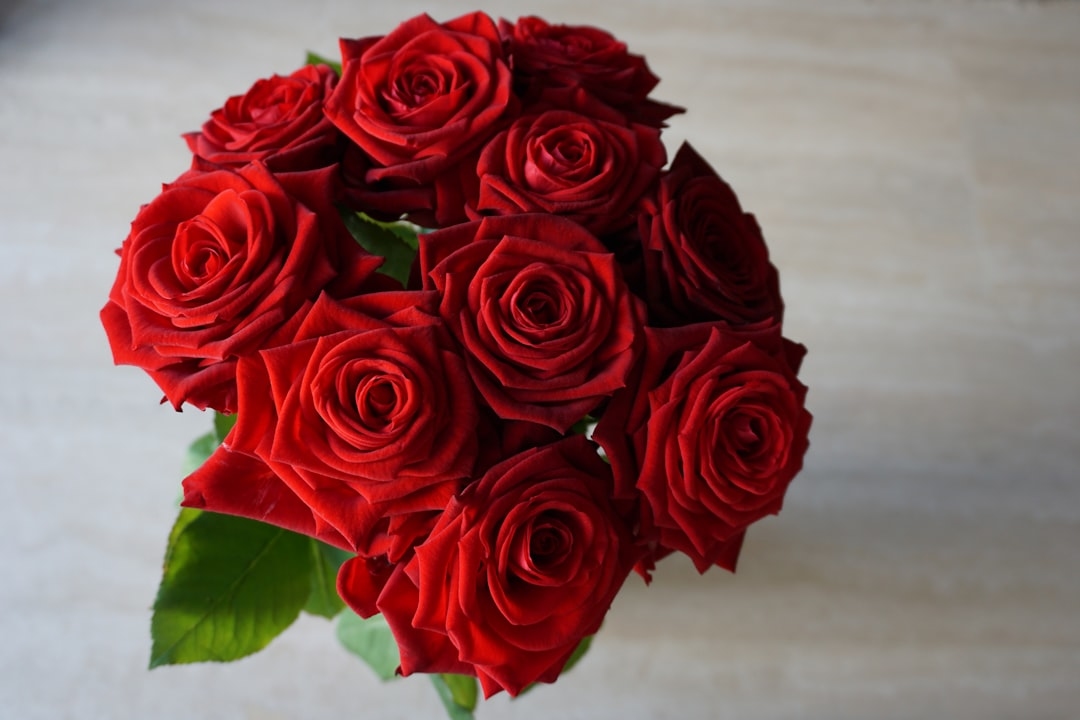
Rose prices aren’t static. The two biggest price spikes in the calendar year hit around Valentine’s Day (February 14) and Mother’s Day (second Sunday in May). During these windows, wholesale rose prices from South American farms can jump 40–80%, and that cost gets passed to consumers. A dozen roses that normally runs $75 can hit $130–$150 the week of February 14.
Practical advice for budget-conscious buyers:
- Order at least 5–7 days before peak dates to lock in pre-holiday pricing.
- Consider alternative colors — white, peach, or blush roses are often 15–20% cheaper than red during peak weeks because demand is concentrated on red.
- Ask your florist about mixed bouquets that blend roses with seasonal flowers — you get the rose impact at a lower per-stem cost.
A Real Purchase: What $85 Actually Gets You
Last spring, a customer named Diana ordered a flower bouquet of roses for her mother’s birthday — a 15-stem arrangement of blush and ivory roses with eucalyptus, wrapped in white kraft paper with a satin ribbon. Total cost: $85, including same-day delivery.
The bouquet arrived fully in bud at 11 a.m. By evening, the roses had started to open. By day four, they were at full bloom. By day eight, they were still presentable. That’s what $85 buys from a florist who sources well and arranges fresh — not just flowers, but a week-long experience for the recipient.
Compare that to a $45 supermarket bunch her brother bought the same day: wilted by day three, gone by day five.
Online vs. Local Florist: The Price-Quality Trade-Off
National online flower delivery services like 1-800-Flowers and Teleflora are convenient, but their pricing model includes significant middleman markups. You might pay $80 for what a local florist would charge $65 for — and the local florist’s product is often fresher and better arranged because it’s not traveling through a distribution center.
That said, not every local florist is equal. The key is finding one that sources frequently, arranges to order, and stands behind freshness. A shop that sources twice a week and arranges the day before delivery is a very different operation from one that arranges the morning of.
How Vase Life Changes the Value Equation
When calculating the real cost of roses, vase life matters. A $100 bouquet that lasts 10 days costs $10 per day of enjoyment. A $50 bouquet that wilts in 4 days costs $12.50 per day — and it underperforms at the moment of giving, which is the entire point. By this logic, premium roses are often the better financial decision, not just the better emotional one.
FAQ: Rose Pricing Questions Answered
How much does a dozen roses cost on average?
In 2026, expect to pay $40–$65 for a basic dozen from a grocery store or budget online retailer, and $75–$120 from a specialty florist with professional arrangement and delivery included.
Why are roses so expensive around Valentine’s Day?
Demand spikes dramatically in the week before February 14, driving up wholesale prices from Colombian and Ecuadorian farms. Florists and retailers pass that increase to consumers. Ordering 5–7 days early typically locks in pre-surge pricing.
What’s the difference between a bouquet and a dozen roses?
A dozen roses is a specific quantity (12 stems), often sold as a simple bunch. A bouquet is an arranged grouping that typically includes greenery, filler flowers, and professional wrapping. Bouquets may contain any number of roses — commonly 12, 15, 18, or 24 — plus complementary elements.
Are expensive roses actually worth the extra cost?
Yes, if freshness and longevity matter. Premium roses from a quality florist last significantly longer, open more fully, and look more impressive. The cost difference between a $50 and $100 arrangement often comes down to stem length, sourcing freshness, and professional arrangement — all of which affect the recipient’s experience.
Do rose prices include delivery?
Not always. Many florists list arrangement prices separately and add a delivery fee of $10–$20. Some offer free delivery over a threshold amount. Always confirm the total cost — including delivery — before completing an order, especially for time-sensitive occasions.
