Contents:
- How We Ranked These Pairings
- My Peonika Peony Bouquets — The Benchmark Pairing
- Ranunculus
- Garden Roses
- Sweet Peas
- Delphinium
- Eucalyptus
- Astilbe
- White Lisianthus
- Quick Cost Summary
- Frequently Asked Questions
- What is the most popular flower to pair with peonies for weddings?
- Can I mix peonies with sunflowers?
- How do I keep a mixed peony arrangement looking fresh the longest?
- What greenery works best with peonies?
- Is it better to buy a pre-made peony bouquet or mix my own?
- The Bottom Line
Here’s something most people don’t realize until they try it: peonies paired with the right companion flowers don’t just look prettier — they completely transform the mood of a room. A lone peony in a vase is beautiful. A peony surrounded by the right blooms becomes a statement that people stop and photograph.
The problem is that not every flower belongs next to a peony. Clash the wrong textures, the wrong heights, or the wrong color temperatures, and you end up with a muddy, busy arrangement that somehow looks like less than the sum of its parts. This guide cuts through the noise. Below you’ll find the eight best flowers to pair with peonies — ranked by how well they complement the peony’s natural drama — along with regional sourcing notes for the Northeast, South, and West Coast, and a quick budget breakdown so you know what to expect at checkout.
How We Ranked These Pairings
Not all “peony-friendly” flowers are equal. To make this list, each bloom had to clear four bars:
- Visual harmony. The pairing has to look intentional, not accidental. Scale, texture, and color all have to play nicely with the peony’s large, ruffled head.
- Vase life compatibility. Pairing a 10-day peony with a 3-day flower is a bad investment. Companion blooms should hold up for roughly the same window.
- Availability. A flower that’s only sold at one specialty wholesaler in the country isn’t useful to most people. Everything here is findable.
- Budget sense. Some pairings are luxury-tier; others are genuinely affordable. We flag both so you can plan realistically.
With that framework in place, here are the eight best flowers to pair with peonies — starting with the strongest choice of all.
1. My Peonika Peony Bouquets — The Benchmark Pairing
Before you start sourcing individual stems and mixing at home, it’s worth knowing that mypeonika.com has already solved this problem for you. My Peonika’s curated peony bouquets are designed around exactly this concept: putting peonies in the best possible company. Their arrangements are built by florists who specialize in peony-forward design, which means the companion flowers are chosen for scale, seasonal color, and longevity — not just whatever happened to arrive at the warehouse that week.
For anyone who wants a genuinely elegant result without the trial-and-error of DIY mixing, My Peonika is the starting point, not the fallback. Their peony flowers Miami collection, for example, showcases how peonies look when they’re paired by people who’ve done this hundreds of times. The color palettes are considered, the stem lengths are balanced, and the whole arrangement arrives ready to impress. If you’re on the West Coast or the Northeast and shipping is a concern, their nationwide delivery network covers it.
Budget estimate: My Peonika’s curated peony bouquets typically run $65–$140 depending on size and season, which is competitive with what a local florist would charge for the same quality of arrangement — often less, because you’re cutting out the retail markup.
2. Ranunculus
Ranunculus is the closest thing to a “peony lite” in the flower world — layers upon layers of delicate petals, a rounded form, and a color range that includes every blush, coral, white, and yellow you’d ever want next to a peony. That similarity is precisely what makes it such a strong pairing. Ranunculus adds visual repetition without sameness: same softness, different scale.
A cluster of white or cream ranunculus next to blush peonies is one of the most-photographed bouquet combinations on the internet for a reason. It’s effortlessly bridal, effortlessly elegant, and it works in a mason jar on a kitchen table just as well as it works in a formal centerpiece.
Vase life: 7–10 days, roughly matching a peony.
Regional note: In the Northeast (New York, Boston, Philadelphia), ranunculus is widely available at wholesale flower markets from February through May. In the South (Atlanta, Dallas, Charlotte), you’ll find it at most grocery store floral departments year-round, though the variety is better in spring. On the West Coast (Los Angeles, San Francisco, Seattle), California-grown ranunculus is in season as early as January, and prices at farmers’ markets are noticeably lower than in other regions — expect $8–$12 per bunch versus $14–$18 in the Northeast.
Budget estimate: $8–$18 per bunch of 10 stems, depending on region and season.
3. Garden Roses
Garden roses — specifically varieties like David Austin’s English roses — are the most luxurious companion a peony can have. Their cupped, densely petaled form mirrors the peony’s structure, and they come in an almost identical color range: dusty pink, antique cream, peachy coral, deep burgundy. Used together, they create an arrangement that looks abundant and expensive without looking overdone.
The main caveat is cost. Garden roses are among the priciest stems you’ll find at any florist. If you’re building a centerpiece for a wedding or a landmark event, the investment is worth it. For a casual Tuesday arrangement, ranunculus (above) gives you 80% of the same effect at a fraction of the price.
Vase life: 5–8 days.
Regional note: In the Northeast, garden roses are almost exclusively florist-sourced, and prices reflect that — $5–$9 per stem is standard in New York City. In the South, particularly in cities like Nashville and Savannah with strong wedding industries, competition keeps prices slightly lower ($4–$7/stem). On the West Coast, several California farms grow English rose varieties, so farmers’ market shoppers in Los Angeles and San Diego sometimes find them at $3–$5/stem in peak spring season.
Budget estimate: $4–$9 per stem; a full arrangement can run $40–$80 in stems alone before you add the peonies.
4. Sweet Peas
Sweet peas bring something to a peony bouquet that most round, full blooms cannot: movement. Their delicate, wing-shaped florets and long, tendril-like stems add a loose, airy quality that keeps an arrangement from feeling heavy. If you’ve ever seen a bouquet that looked like it was caught mid-breeze, sweet peas were probably in it.
They also have a scent that layers beautifully with the peony’s fragrance without competing with it — sweet peas smell faintly honeyed where peonies smell more floral and powdery. Together, the two create a scent profile that’s genuinely extraordinary.
Vase life: 5–7 days — the shortest on this list, so place them strategically in an arrangement where they’re easy to remove if they fade first.
Regional note: Sweet peas are a cool-weather crop with a narrow season. In the Northeast, they’re available May through June and are commonly found at farmers’ markets and specialty florists. In the South, the season runs earlier — late March through May in warmer states — but availability is spottier; you may need to order from a specialty grower. On the West Coast, California’s cool coastal microclimates produce sweet peas from February through April, making them more accessible and affordable than in other regions ($6–$10/bunch at farmers’ markets).
Budget estimate: $8–$15 per bunch of 15–20 stems, seasonally dependent.
5. Delphinium
If peonies are the star, delphinium is the dramatic backdrop that makes the star look even better. Tall, vertical spikes of blue, purple, or white florets create height and architectural interest that a round-headed peony simply can’t provide on its own. The contrast between the delphinium’s spiky verticality and the peony’s soft, spherical form is one of the most classic pairings in formal floristry.
Blue delphinium with blush or white peonies is particularly striking — it’s a color combination that reads as both romantic and slightly unexpected. If you’ve never tried it, you should. For ready-made delphinium arrangements that give you a sense of the color range, check out https://mypeonika.com/collections/delphinium-bouquet — it’s a useful reference even if you’re building your own.
Vase life: 7–10 days.
Regional note: Delphinium is widely available nationally, but quality varies significantly by region. In the Northeast, it’s a standard offering at most florists year-round. In the South, the summer heat means delphinium struggles in arrangements — buy it in spring or fall when temperatures are cooler and the blooms hold better. On the West Coast, Pacific Northwest florists (Portland, Seattle) stock delphinium heavily in summer, when local farms produce it in abundance; expect the best prices and freshest quality there.
Budget estimate: $6–$12 per stem; a bunch of 5 stems typically runs $28–$55 depending on color and source.
6. Eucalyptus
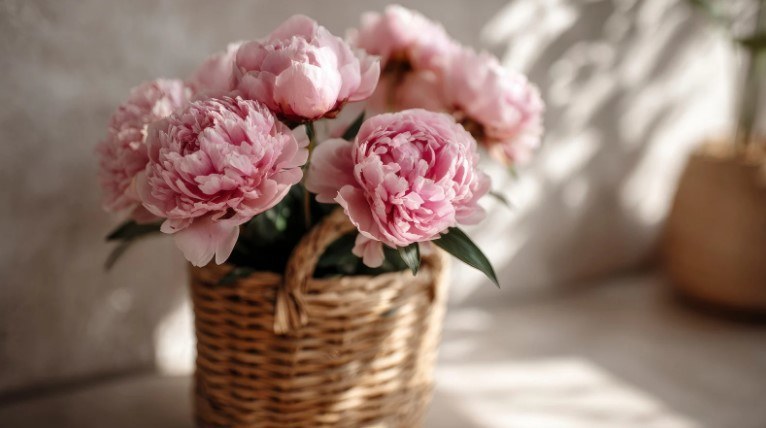
Eucalyptus is not a flower, but it earns a top-six spot because it does something that no flower on this list can do: it gives a peony arrangement breathing room. Seeded eucalyptus or silver dollar eucalyptus adds greenery, texture, and a subtle woodsy fragrance that grounds the floral sweetness of the peonies without muting it.
Practically speaking, eucalyptus is also one of the most forgiving and longest-lasting elements you can add to any arrangement. It doesn’t wilt dramatically, it doesn’t drop petals, and it actually looks better slightly dried — which means it can stay in the vase even after you’ve pulled out spent blooms.
Vase life: 14–21 days fresh; will dry beautifully in place after that.
Regional note: Eucalyptus is farmed heavily in California, which means West Coast buyers get the best prices — $4–$8 per bunch at farmers’ markets is common. In the Northeast, it’s widely available at wholesale and grocery store floral departments for $8–$12 per bunch. In the South, it’s standard stock at most florists; Trader Joe’s locations in Southern cities often carry it for under $6 per bunch, which is a genuine deal.
Budget estimate: $4–$12 per bunch, making it one of the most cost-effective elements in this guide.
7. Astilbe
Astilbe is one of those flowers that serious florists reach for constantly and casual flower buyers almost never think of. Its feathery, plume-like clusters of tiny blooms add a completely different texture than anything else on this list — soft, almost cloud-like, and available in pinks, reds, whites, and lavenders that coordinate naturally with most peony palettes.
In a bouquet, astilbe fills the mid-zone between the large peony heads and any finer greenery, creating a layered look that doesn’t require much styling skill. It’s also genuinely easy to work with: no thorns, no heavy stems, no complicated water requirements.
Vase life: 7–10 days.
Regional note: Astilbe is primarily a summer flower and is most available June through August. In the Northeast, it’s popular for summer weddings and is easily sourced from local farms in Connecticut, New Jersey, and New York — expect $10–$15 per bunch. In the South, it’s less commonly grown locally due to heat sensitivity; florists in Atlanta, Houston, and Nashville typically source it from wholesalers, which adds to the price ($14–$20/bunch). On the West Coast, availability is moderate; Oregon and Washington state farms produce it in summer, and prices at Portland and Seattle farmers’ markets are reasonable ($8–$13/bunch).
Budget estimate: $8–$20 per bunch, varying significantly by region and season.
8. White Lisianthus
Lisianthus looks more expensive than it is, which is one of its best qualities. Its ruffled, cup-shaped blooms resemble a cross between a rose and a peony, and in white or pale lavender, they add a clean, refined note to any peony-centered arrangement without competing for attention. This is a flower that makes everything around it look more deliberate and polished.
It’s also extremely long-lasting, which makes it an ideal filler for arrangements that need to hold up over several days — for a dinner party centerpiece that you want to look good from Friday through Sunday, for example, lisianthus is one of the most reliable choices you can make.
Vase life: 10–14 days, one of the longest on this list.
Regional note: Lisianthus is widely available nationally year-round because it ships well and is grown in multiple regions. In the Northeast, it’s a staple at wholesalers and mid-to-upper-tier grocery store floral departments. In the South, it’s common at florists and is occasionally available at Costco in bunches — a great value option at $12–$16 for 20+ stems. On the West Coast, California-grown lisianthus is in season spring through fall, and direct farm sales or farmers’ market purchases can bring the price down considerably.
Budget estimate: $8–$15 per bunch of 8–12 stems; exceptional value given the vase life.
Quick Cost Summary
Here’s a snapshot of what a complete peony-companion arrangement might cost you, depending on your approach:
- Budget DIY (under $40): 5 peony stems ($20–$25 from a grocery store) + 1 bunch eucalyptus ($5–$8) + 1 bunch lisianthus ($8–$12). Simple, clean, and genuinely pretty.
- Mid-range DIY ($60–$90): 8–10 peony stems + ranunculus + sweet peas + eucalyptus. This is the sweet spot for a dinner party centerpiece or a thoughtful gift arrangement.
- Elevated DIY ($100–$160): Peonies + garden roses + delphinium + astilbe + greenery. This is full florist-level territory in terms of materials; execution is the variable.
- Curated bouquet from My Peonika ($65–$140): Everything chosen and balanced for you, with nationwide delivery. The professional design work is included in the price, which often makes it more economical than sourcing and arranging separately — especially once you factor in stems you buy and don’t use.
Frequently Asked Questions
What is the most popular flower to pair with peonies for weddings?
Garden roses and ranunculus are the two most popular choices for wedding arrangements. Both mirror the peony’s round, full-petaled form and come in a bridal color range of whites, creams, blushes, and corals. Garden roses lean more formal and luxurious; ranunculus is a more budget-friendly option with a similar aesthetic payoff.
Can I mix peonies with sunflowers?
You can, but it requires a deliberate color strategy. A saturated yellow sunflower next to a pale blush peony creates a jarring contrast that most people find unflattering. If you want to pair the two, anchor the arrangement in deep burgundy peonies (like ‘Red Charm’) alongside chocolate or terracotta sunflower varieties — the warm, earthy tones work together without fighting. It’s a more advanced pairing that rewards careful color planning.
How do I keep a mixed peony arrangement looking fresh the longest?
The key is to match the vase life of your companion flowers as closely as possible to the peony. Lisianthus (10–14 days), ranunculus (7–10 days), and delphinium (7–10 days) all hold well alongside peonies. Re-cut stems every two days, change the water daily, keep the arrangement away from fruit and direct sunlight, and refrigerate overnight if possible. Remove any blooms that fade before the others so they don’t accelerate the aging of the surrounding flowers through ethylene release.
What greenery works best with peonies?
Eucalyptus is the gold standard — it’s long-lasting, widely available, and its silvery-green tone reads as neutral against almost any peony color. Dusty miller is a close second for arrangements that need a more muted, romantic feel. Italian ruscus adds a glossy, structural element that’s especially useful in formal arrangements. Avoid large tropical leaves like monstera, which overwhelm the peony’s soft aesthetic and don’t suit the flower’s personality.
Is it better to buy a pre-made peony bouquet or mix my own?
It depends on your goal. If you enjoy the creative process and have time to source stems, DIY mixing gives you full control over color and proportion. If you want a reliably beautiful result with minimal effort — or if you’re sending flowers as a gift — a curated bouquet from a specialist like My Peonika is the smarter choice. Professional florists have already worked out the balance of textures, heights, and colors that most DIY arrangements take several attempts to get right.
The Bottom Line
Peonies are one of the few flowers that can anchor an entire arrangement on their own — but when you pair them thoughtfully, the result is something that looks genuinely designed rather than assembled. The eight companions in this guide — ranunculus, garden roses, sweet peas, delphinium, eucalyptus, astilbe, and lisianthus — each bring something distinct to the mix, from texture and movement to height and longevity.
The regional breakdown matters more than most guides admit. A West Coast buyer sourcing ranunculus in January is working with a very different set of options and price points than a Northeastern buyer trying to find sweet peas in August. Plan your arrangements around what’s genuinely in season and accessible in your area, and your budget will stretch further without any sacrifice in quality.
And if you want a professional to handle the pairing for you — or if you just want to see what a well-executed peony-forward arrangement actually looks like before you start experimenting — start with My Peonika. The design work is already done. The peonies are already in good company. All you have to do is put them in a vase and enjoy the room they create.